Regulatory Pressures Transform Sweepstakes Casino Operations Across Multiple States
Uma Lang · May 31, 2026

Regulatory Pressures Transform Sweepstakes Casino Operations Across Multiple States
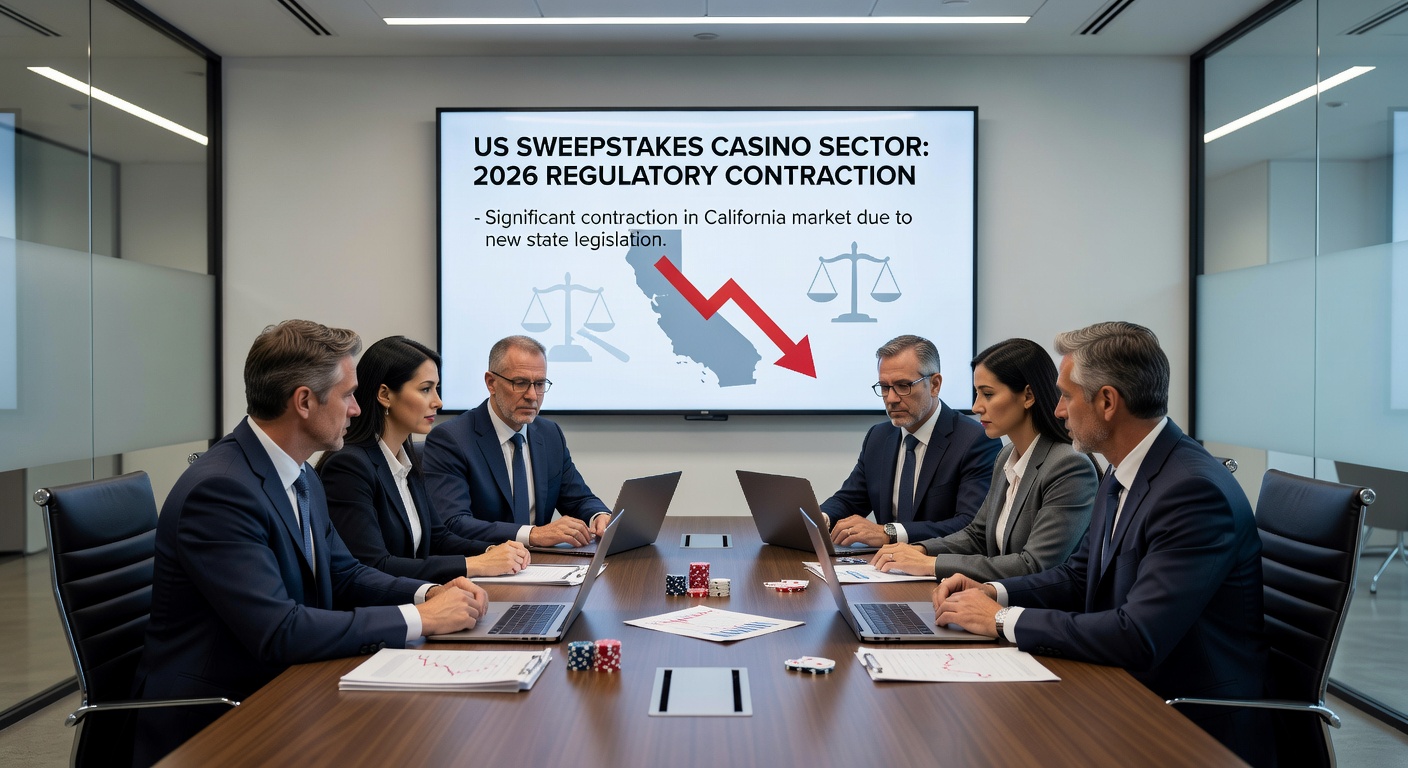
The US sweepstakes casino sector entered 2026 amid substantial regulatory shifts that reduced available markets and prompted operators to adjust their approaches, with California's Assembly Bill 831 taking effect on January 1 and removing an estimated one-fifth of national revenue from the sector, while additional states implemented or scheduled restrictions that compounded the contraction.
California Leads the Wave of Market Restrictions
Assembly Bill 831 set the tone for the year by enforcing new limitations on sweepstakes casino activities throughout California, a state that previously contributed heavily to overall industry earnings, and this measure forced operators to reevaluate their national footprints since the bill's provisions eliminated access to a significant portion of the user base that had driven revenue growth in prior years. Observers note that the timing aligned with broader state-level scrutiny, as lawmakers sought to address concerns around sweepstakes models that blend gaming elements with promotional mechanics.
Subsequent Actions in Indiana and Earlier Exits
Indiana followed with House Bill 1052, which received approval in March 2026 and began enforcement on July 1, creating another barrier for platforms operating within state borders and adding to the cumulative effect of lost markets. Earlier withdrawals occurred throughout 2025 in Maine, New York, Connecticut, Mississippi, Louisiana, Montana, and Nevada, where operators discontinued services in response to evolving legal interpretations or direct legislative actions that targeted the sweepstakes format specifically. These sequential developments illustrate a pattern where states adopted measures at different points, yet each contributed to a shrinking operational landscape for companies reliant on multi-state presence.
Operator Adaptations and Strategic Shifts
Major players such as Virtual Gaming Worlds, the parent company behind Chumba Casino and LuckyLand Slots, responded by exiting several jurisdictions, introducing new brands including LuckyLand Casino and Just Slots, and redirecting efforts toward portfolio adjustments that emphasized responsible-play messaging alongside alternative business models. These changes occurred against a backdrop of ongoing litigation and tightened marketing rules that limited promotional channels, prompting companies to explore diversified revenue streams while maintaining compliance in remaining active states. Data from industry tracking shows that such portfolio engineering became a common tactic as operators sought to offset revenue shortfalls through targeted innovations rather than expansion.
Those who have followed the sector closely point out that responsible-play initiatives gained prominence in operator communications during this period, serving both as a compliance tool and a method to retain user engagement in permitted regions. Alternative models, including variations on existing sweepstakes frameworks, emerged as operators tested approaches that might withstand further regulatory examination, although success depended on navigating the patchwork of state laws that continued to evolve through mid-2026.
Litigation and Marketing Constraints Shape the Environment
Ongoing legal proceedings influenced how companies positioned themselves, with several operators facing challenges that required resources and attention separate from day-to-day platform management. Marketing restrictions further complicated outreach efforts, as limitations on advertising channels reduced visibility in competitive digital spaces and forced reliance on organic growth or refined user retention tactics. According to analyses from Casino Center reports, these combined pressures accelerated strategic pivots that prioritized sustainability over rapid scaling in the remaining viable markets.
Broader Implications for the Sector Entering Mid-2026
By May 2026 the cumulative impact of these regulatory moves had become evident in reduced national revenue figures, while surviving operators concentrated resources on states with clearer operational guidelines. Research from gaming policy institutes indicates that the contraction affected not only large entities but also smaller platforms that lacked the flexibility to relocate or rebrand quickly, leading to consolidation trends within the industry. Those monitoring enforcement patterns note that states continued to reference consumer protection rationales when advancing similar legislation, creating a precedent that other jurisdictions might follow in subsequent sessions.
Conclusion
The sequence of state-level interventions from California through Indiana and prior exits established a new baseline for sweepstakes casino operations, compelling operators like Virtual Gaming Worlds to implement measured responses that balanced compliance with continued service delivery. Figures reveal that one-fifth of prior national revenue disappeared with the California measure alone, and the addition of further restrictions underscored the challenges of operating across fragmented regulatory environments. Companies adapted through brand launches, messaging refinements, adn model experimentation, yet the overall trajectory pointed toward a more constrained market as 2026 progressed.