Layered Incentive Structures Driving Transitions Across Digital Gaming Formats
Tina Patterson · Aug 6, 2026

Layered Incentive Structures Driving Transitions Across Digital Gaming Formats
Operators in the digital gaming sector have developed multi-tiered reward systems that direct user activity from automated reel sequences toward interactive dealer encounters and event-based athletic predictions, and these structures operate through progressive access levels tied to deposit volume, session duration, and activity variety. Data from industry tracking services indicate that platforms allocate bonus credits, cashback percentages, and exclusive feature unlocks in graduated stages, with initial tiers focused on reel-based games while higher tiers open live table sessions and prediction markets on athletic outcomes. According to reports issued by the American Gaming Association, such layered models correlate with increased cross-format participation rates across multiple state-regulated markets.
Implementation typically begins with entry-level incentives that reward consistent reel play through free spins or multiplier boosts, yet subsequent thresholds require users to sample dealer-led table games or place wagers on scheduled sporting events before advancing further. Observers note that this sequencing creates natural progression paths because each completed tier unlocks new reward multipliers applicable across all formats, including higher payout percentages on live blackjack rounds or enhanced odds on football match predictions. Research conducted by the University of Nevada, Reno gaming studies program shows participation in live dealer formats rising 18 percent year-over-year in jurisdictions where these tiered systems are active.
Mechanics Behind Tier Progression
Users accumulate points through deposits and play volume, and these points determine tier status while simultaneously qualifying them for format-specific bonuses such as reduced house edges on roulette tables or bonus bets on basketball outcomes. Platforms track metrics including total wagered amounts, frequency of live session participation, and diversity of prediction markets engaged, then adjust reward visibility accordingly. Figures released by the Canadian Gaming Association in early 2026 reveal that operators employing five or more distinct tiers report higher retention across mobile interfaces compared with single-tier models.
August 2026 data from several U.S. state gaming commissions further illustrate that users reaching mid-tier status shift approximately 35 percent of their activity away from automated reels toward dealer interactions and athletic event markets within a 60-day window. The transition occurs because reward structures cap reel-only benefits at certain levels, compelling engagement with additional formats to maintain or increase overall returns.
Integration With Live Dealer and Prediction Markets
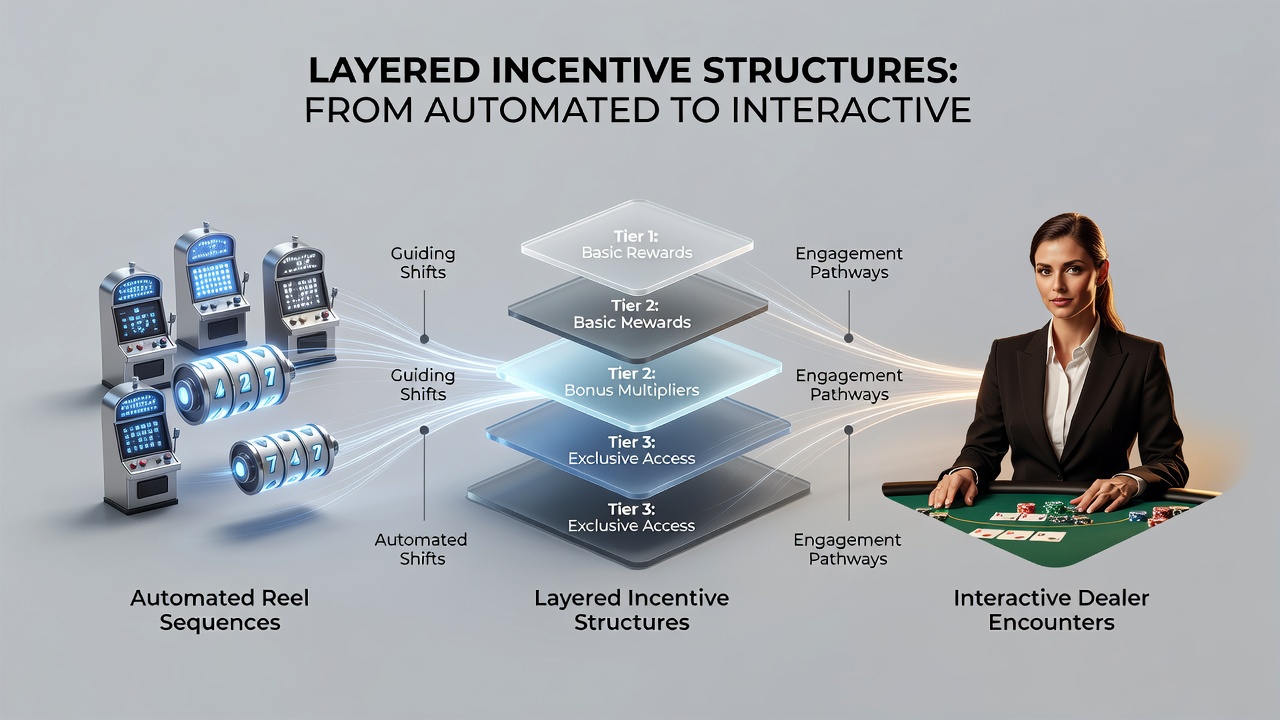
Live dealer encounters receive dedicated incentives once users cross specified thresholds, including priority access to private tables and real-time chat features unavailable at lower tiers. Event-based athletic predictions gain traction through separate reward pools, such as parlay multipliers or refund credits on losing wagers, which activate only after users demonstrate activity across both live and prediction categories. Industry analysts tracking platform logs observe that these conditional unlocks encourage broader exploration while maintaining overall engagement volume.
Regulatory filings from the Nevada Gaming Control Board document that layered structures must disclose all progression requirements clearly, and operators comply by embedding tier explanations within account dashboards. This transparency requirement coincides with increased adoption of hybrid reward pathways that connect reel sequences directly to dealer sessions and match-day wagers on portable devices.
Cross-Format Reward Activation Patterns
Activation sequences often follow predictable patterns where initial reel activity generates credits redeemable in live environments, while prediction market participation unlocks additional reel bonuses to close the loop. Studies from the National Council on Problem Gambling research division indicate that users exposed to these interconnected incentives maintain longer average session times across all three categories without disproportionate concentration in any single format. European regulatory summaries from the Malta Gaming Authority similarly note rising interest in multi-format loyalty programs that span automated, interactive, and predictive elements.
Operators adjust tier boundaries seasonally, and data collected during the first half of 2026 show adjustments in August coinciding with major athletic calendars to emphasize prediction market rewards during peak event periods. These adjustments rely on aggregated user behavior metrics rather than individual targeting, preserving compliance with data protection standards across jurisdictions.
Conclusion
Layered incentive structures continue to shape participation patterns by linking rewards across automated reel sequences, interactive dealer encounters, and event-based athletic predictions within digital environments. Tracking data from multiple regulatory and industry sources confirm measurable shifts in format engagement as users advance through defined tiers, while compliance frameworks ensure disclosure of progression mechanics. Ongoing monitoring by academic and trade organizations provides updated figures on retention and cross-format activity as these systems evolve through 2026 and beyond.